
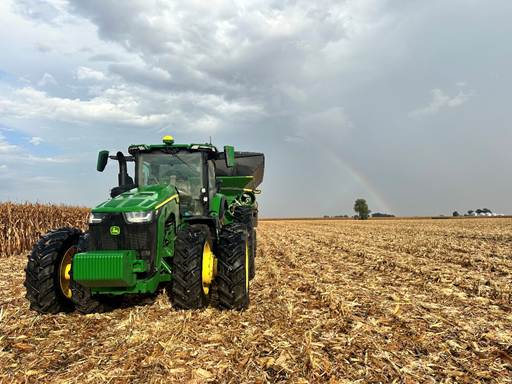
Another fall season is upon us, and with it comes cooler temperatures, the return of football, and harvest time for farmers across the United States. Harvest on my family farm began this past week in Illinois. So far, yields are off to a strong start, but with the varied weather patterns across the Corn Belt this year, that may not be the case for every farm. Unfortunately, a little rain meant we had to pause harvest, but it also made for a beautiful rainbow over the farm.
Fall also brings another USDA National Land Values Summary. Each year, this report provides some important benchmark metrics for evaluating where farmland values are headed across the country. After several years of record growth, the latest numbers aren't necessarily surprising. Farmland values continued to increase in 2026, but there is an important distinction: land values are still rising, but the pace of growth is slowing.
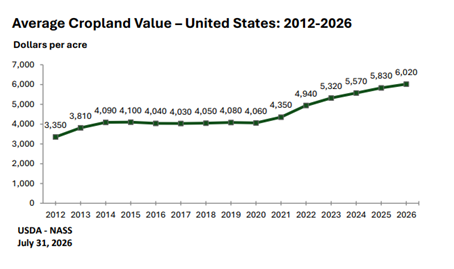
According to the USDA's 2026 report, the average value of U.S. cropland reached $6,020 per acre, an increase of 3.3% from 2025. This is the first time the national average cropland value has surpassed $6,000 per acre. Farm real estate — the all-land average of cropland, pasture, and buildings — increased 3.4% to $4,500 per acre, while pastureland increased 4.2% to $2,000 per acre.
The continued appreciation is notable given the current agricultural environment. Commodity prices have been volatile, farm margins remain under pressure, and higher interest rates have made farmland more expensive to finance. Despite these challenges, demand for quality farmland has remained strong, continuing a trend that has pushed land values substantially higher over the past several years.
Cropland Values Continue to Rise
The 2026 numbers continue a multi-year trend of increasing farmland values. However, the rate of appreciation has moderated. Cropland values increased 4.7% in 2025 compared with 3.3% in 2026. In other words, farmland values are still moving higher, but the pace of that growth has slowed.
That may not sound like a dramatic difference, but it is an important shift after several years of particularly strong appreciation. As the market becomes more normalized, factors such as farm income, interest rates, land productivity, and local demand may play a larger role in determining where individual properties trade.
Source: USDA
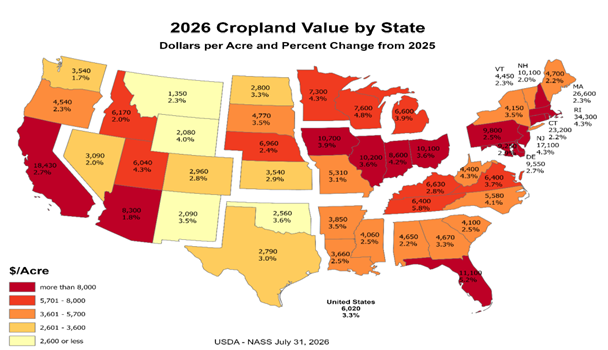
Regional differences also remain significant. The Corn Belt continues to represent some of the most valuable cropland in the country, with an average cropland value of $9,280 per acre in 2026. Illinois averaged $10,200 per acre, while Iowa reached $10,700. Ohio averaged $10,100 per acre and Indiana $8,600.
Source: USDA
These figures illustrate an important point about the national USDA average: farmland is not a homogeneous asset. Soil quality, productivity, location, water availability, field characteristics, and local tenant demand can all have a meaningful impact on the value of an individual property. For investors, this distinction is particularly important. The $6,020 national average is a useful benchmark, but it does not necessarily reflect the value or investment characteristics of the highest-quality farmland.
On the same USDA map, Mississippi cropland averaged about $4,650 per acre and North Carolina about $5,580 — well below both the $6,020 national cropland average and the Corn Belt. That is the “not homogeneous” point in Promised Land’s own geography.
How Long Will This Trend Continue?
Will land values continue to rise, or are we heading toward a period of flat or declining values? That is the million-dollar question on many agriculturalists' minds. Historically, farmland values have been closely tied to farm income and commodity prices. Farm income has been squeezed over the past couple of years, and 2026 is expected to remain a challenging year for many producers due to lower commodity prices, tariff pressure, and higher input costs.
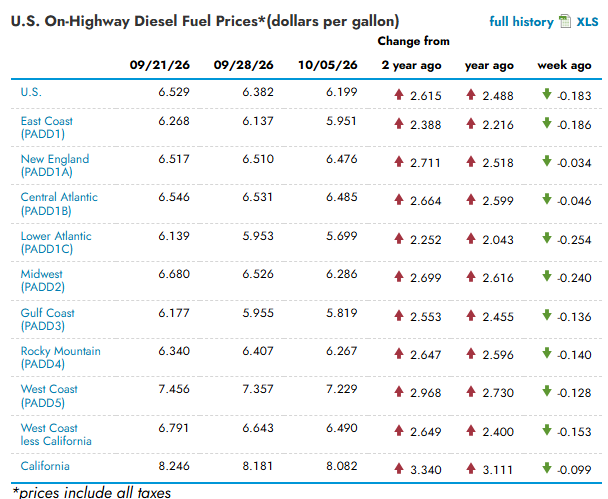
Diesel fuel and fertilizer are two good examples. These costs can have a significant impact on farm profitability, particularly during harvest when farmers are constantly fueling combines, tractors, trucks, and other equipment.
Source: U.S. Energy Information Administration
Farmers are hoping to see continued improvement in commodity prices to help offset some of these increased input costs. So far, corn and soybean prices have been rallying from their summer lows, providing some much-needed relief as farmers continue to face higher input costs.
December 2026 Corn Futures as of 10/7/2026
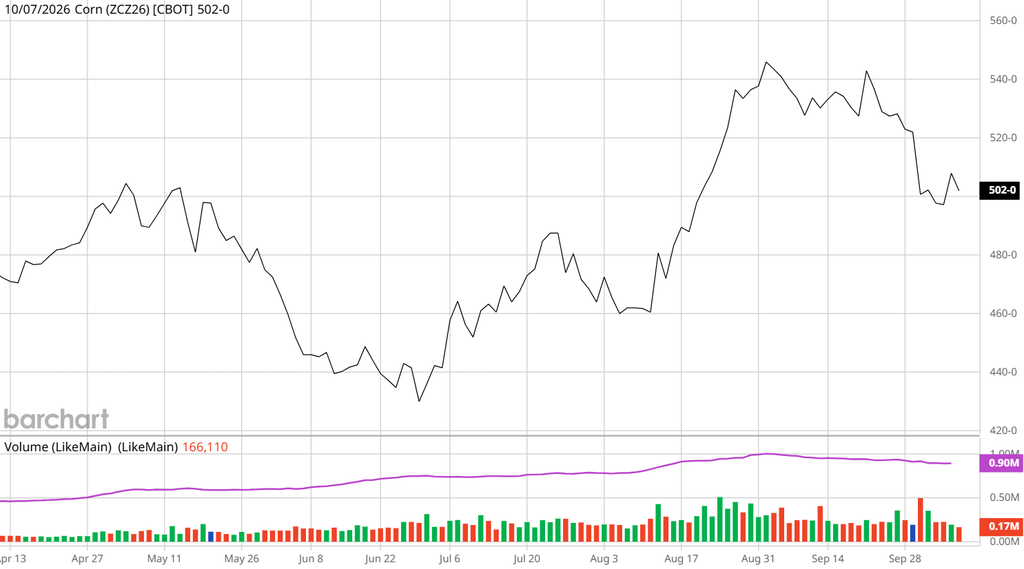
Source: Barchart
But farmland is influenced by more than the income it generates in a single year. Limited supply, long-term expectations for agricultural production, strong farmer balance sheets, and competition among farmers and investors can all contribute to sustained demand.
There is also a fundamental supply constraint. Unlike many other investments, the supply of productive farmland cannot simply expand when demand increases. The amount of high-quality agricultural land is finite, and the best properties rarely come to market. This scarcity can help explain why high-quality farmland has continued to command strong prices even when agricultural fundamentals have become less favorable.
At the same time, the moderation in appreciation suggests that buyers are becoming more selective. With higher acquisition costs and more challenging farm economics, the underlying productivity and income-generating potential of a property become increasingly important.
What Does This Mean for Farmland Investors?
For farmland investors, the 2026 report reinforces the importance of focusing on quality rather than simply relying on broad market appreciation.
When land values are rising rapidly across the country, it can be easy to view appreciation as the primary driver of returns. But as appreciation moderates, the characteristics of the individual asset become increasingly important.
USDA’s companion cash-rent survey put U.S. cropland rent at $160 per acre in 2026, $1 below 2025, even as cropland values rose 3.3%. Slowing appreciation plus a flat-to-down rent print is why individual farm income, not the national land index, should do more of the work from here.
High-quality soils, strong historical yields, reliable water resources, favorable locations, and strong tenant demand can provide a foundation for long-term performance. Properties that can generate attractive rental income while maintaining the potential for long-term appreciation may be particularly well positioned as the market enters a more normalized period.
This is one reason we continue to focus on high-quality farmland at Promised Land. Rather than trying to predict short-term movements in land prices, our strategy is centered on acquiring productive assets in markets with strong underlying agricultural fundamentals. This focus will be especially important as we evaluate new opportunities under Opportunity Zone 2.0, where the quality and long-term fundamentals of each investment will be critical over the OZ required 10-year hold period.
Author: Ailie Elmore Burd
The U.S. Department of the Treasury recently released its updated Office of Tax Analysis Working Paper, detailing administrative tax data on the Opportunity Zone (OZ) program through Tax Year 2024. As detailed in a recent analysis by the Economic Innovation Group (EIG), the data paints a clear picture of success. The OZ tax incentive has expanded dramatically, driving significant capital into low-income communities across the nation.
With $112 billion in cumulative qualified investment deployed and 77% of all designated zones receiving capital through 2024 (up from 48% in 2020), the program has established an impressive footprint of social and community impact.
For investors looking ahead to the OZ 2.0 regime taking effect on January 1, 2027, under the One Big Beautiful Bill Act (OBBBA), the Treasury's report offers vital insights—particularly regarding the untapped, highly investable nature of rural OZs.
Here is what the latest Treasury data reveals about rural America and why rural OZs are primed for a major surge in capital.
Rural OZs Are Far More Investable Than Policymakers Believed
A common misconception during the early years of the OZ program was that rural census tracts would be overlooked in favor of dense, high-cost urban real estate. The Treasury’s updated data officially dispels that myth.
- Broad Geographic Participation: An impressive 77% of rural OZs received qualified investment through 2024, matching the national participation rate for urban zones.
- Meaningful Capital Deployment: Rural tracts represent roughly 38% of all designated OZs and attracted $16.8 billion in Qualified Opportunity Zone (QOZ) property through 2024 (16.1% of total QOZ property), up from 12.6% in 2020.
- Smaller Deals, High Breadth: While the average rural OZ with investment received $7.3 million compared to $23.3 million for non-rural OZs, the high participation rate proves that viable, bankable projects rightsized for the community exist across rural America.
Why Rural Incentives Are Still Warranted
Despite high participation rates, capital density in rural areas still lags urban centers on a per-zone basis ($7.3 million vs. $23.3 million). Rural communities face unique structural financing gaps, lower baseline asset values, and localized market dynamics. The data demonstrates that while rural OZs are highly investable, targeted policy enhancements remain necessary to scale deal size and further bridge the rural equity gap.
Why Investors Could Pivot to Rural OZs in OZ 2.0
Historical tax data reveals a key investor behavior: OZ investors heavily overweight the basis step-up benefit.
During OZ 1.0, tax filings spiked significantly in 2019 and 2021—the final years for investors to secure the original 7-year (15%) and 5-year (10%) basis step-up deadlines. When a direct tax reduction is on the table, investors moved fast.
Under the upcoming OZ 2.0 framework (post-2026), Congress intentionally restructured basis step-up incentives to favor rural America:
- Standard OZ 2.0 Step-Up: Capital deployed in standard (urban) OZs will receive a 10% basis step-up after a 5-year hold.
- Rural OZ 2.0 Step-Up: Capital deployed into Qualified Rural Opportunity Funds (QROFs) will receive a 30% basis step-up after a 5-year hold.
- Lower Development Hurdles: Rural OZs also feature a reduced 50% substantial improvement threshold for existing buildings (compared to 100% in non-rural zones), dramatically improving project economics for value-add deals.
The 30% rural OZ step-up benefit seems to be garnering a lot of attention among savvy OZ investors. We liken it to a Dire Strait type “Money for Nothing” strategy as obtaining this tax benefit has no direct out of pocket costs to investors so it’s discrete return is infinite.
With tax-conscious investors prioritizing the maximization of this basis adjustment, the rural OZ 3x step-up advantage (30% vs. 10%) is forcing fund managers and capital allocators to give rural OZs a much closer look starting in 2027.
Changing OZ 2.0 Landscape
As we transition from the original OZ 1.0 program to the permanent, rolling 10-year investment cycles of OZ 2.0, the landscape is shifting dramatically. Under the current data through Tax Year 2024, the program has attracted $112 billion in total cumulative investment, with $16.8 billion flowing into rural OZs. Furthermore, 77% of all designated zones, including 77% of rural OZs, have seen active participation. Moving forward, the eligibility rules are tightening, with low-income community criteria capped at 70% of the area median income.
For investors, the tax incentives are also evolving. The original 10% standard basis step-up expired at the end of 2021. However, the new OZ 2.0 regime introduces a flat 5-year hold for a 10% standard step-up, and an impressive 30% step-up for rural OZs after the same 5-year period. Additionally, the substantial improvement threshold, previously set at 100% of non-land basis across all zones, drops to 50% for rural OZs under the new rules, while remaining at 100% for non-rural projects.
Warren Buffet’s partner Charlie Munger was fond of saying, "Show me an incentive and I'll show you an outcome." The hard and soft data confirm that OZ 1.0 investments of $112 billion have transformed lives in community after community that may have otherwise been overlooked. We think the permanency of OZ 2.0 and the more flexible 5-year deferral and basis step-up regime will attract more capital and benefit more OZs, particularly rural American communities.
Promised Land OZ’s Unique Position
Rural OZs is Promised Land OZ’s sweet spot. OZ 2.0 is a win-win for the investors and rural communities we serve.
Promised Land OZ won’t need to materially adjust our investment strategy. Our farmland OZ strategy will directly benefit from the new rural OZ incentives – 30% step-up in basis and the lower 50% improvement test – simply by executing our tried-and-true investment process in a similar manner.
We believe we are one of a few, perhaps only, institutional fund managers solely dedicated on rural OZs under the OZ 1.0 regime. Our prior two funds are a testament to our unique ability to meet the 90% qualifying rural asset requirement for Qualified Rural Opportunity Zone Fund (QROF) investors to receive the attractive 30% step-up in tax basis. Across our two prior funds, 100% of our 13 historical OZ farm investments were in rural OZs. Applied retroactively, we would have achieved the necessary QROF designation for investors to achieve the compelling 30% “Money for Nothing” tax benefit.
Lastly, the U.S. farmland opportunity set is vast representing a $4 trillion, largely non-institutional asset class. There will undoubtedly be plenty of high-quality farmland located in OZ 2.0 designated tracts in which to apply our scalable and repeatable underwriting process. We’re excited to play a role in harvesting potential in rural American OZs.
Author: Dylan Gardner
Interim IRS OZ Guidance
With the transition from the original Opportunity Zone program (OZ 1.0) to the new OZ 2.0 regime fast approaching on January 1, 2027, the IRS recently dropped Notice 2026-40.
Driven by the One Big Beautiful Bill Act (OBBBA), this interim guidance clarifies the rules of the road for the great OZ handoff. For investors and developers, it is a classic "good news, bad news" scenario.
Here is what you need to know to protect your capital and navigate the transition.
The Door Closes: No Re-Deferring Your 2026 Tax Bill
For years, a popular tax-planning hope circulated: when the original OZ 1.0 deferred gains finally trigger on December 31, 2026, could investors simply roll those recognized gains into a new QOF and kick their deferred capital gain tax further down the road?
The IRS has now officially and definitively shut that door.
The Ruling: Capital gains originally deferred under OZ 1.0 that are recognized on December 31, 2026, cannot be reinvested into another QOF for a second round of deferral.
What this means for you:
- A Real Tax Liability: You must prepare to pay the tax on those original deferred gains when filing your 2026 tax return (or extension) in April 2027.
- Active Planning Required: Work with your tax advisor now to explore mitigation strategies—such as tax-loss harvesting, charitable giving, or maximizing passive losses—before the end of the year.
- Your 10-Year Benefit is Safe: Paying the tax bill in 2026 does not kill your long-term benefits. If you keep your money in your current QOF for the required 10-year hold, your eventual exit remains 100% tax-free.
The Door Opens: Bridging OZ 1.0 Tracts into the OZ 2.0 Era
While the IRS closed the door on re-deferrals, they opened a highly anticipated pathway for deploying new capital into existing OZ 1.0 designated tracts.
If you want to invest new capital gains into an existing OZ 1.0 project and still secure the full suite of OZ 2.0 tax benefits, the project must meet three strict requirements by the December 31, 2026, deadline:
- Written WCSH Plan: The project must operate under a valid, written Working Capital Safe Harbor (WCSH) plan adopted on or before December 31, 2026.
- The 10% Capital Test: At least 10% of the project's total estimated working capital must be physically received at the operating business level (the QOZB) by the deadline.
- The 5% Commitment Test: At least 5% of the total estimated working capital must be expended or committed under binding written contracts by the deadline.
If a project fails to clear these three hurdles by December 31, 2026, it will be frozen out of the new post-2026 OZ 2.0 tax benefits that take effect January 1, 2027
The Post-2026 Playbook: A Brand-New 10-Year Cycle
For capital deployed on or after January 1, 2027, we enter the official OZ 2.0 era. The rules of engagement are shifting from a single calendar deadline to a clean, rolling timeline:
| Feature | OZ 2.0 Rules (Post-2026) |
| Deferral Timeline | Flat five-year deferral from your initial investment date. |
| Standard Step-Up | A 10% basis step-up once you cross the five-year mark. |
| Rural Benefit | A 30% basis step-up if investing in a Qualified Rural Opportunity Fund. Promised Land OZ is targeting a fully compliant Qualified Rural Opportunity Zone Fund (QROF) to take advantage of this valuable incentive. |
| Compliance Runway | Expired OZ 1.0 tracts can be treated as qualified zones for compliance testing through December 31, 2047. |
Additionally, don't worry if you harvest capital gains late in 2026. The IRS confirmed that pre-2027 gains can still qualify for the OZ 2.0 framework as long as they are deployed within their standard 180-day window, even if that window extends into 2027. That eligibility window started on July 9, 2026, assuming a January 1, 2027, investment date.
The Bottom Line
The OZ 2.0 rules of the road are settling, and the OZ roadmap is being redrawn. States are currently going through their determination process to nominate new OZ 2.0 designated tracts. Eligible census tracts are 25% fewer due tighter low-income community determination factors starting in 2027.
In addition, the window to act on projects in existing OZ 1.0 designated tracts is rapidly closing. Proactive OZ fund sponsors are busy using the next five-months to identify viable OZ 1.0 projects, align safe harbor plans to achieve requisite capital raising and commitment thresholds, and preparing for the OZ 2.0 starting gun on January 1, 2027.
Author: Dylan Gardner and John Heneghan
Observations from Mid‑South ASFMRA
It was a privilege for the Promised Land Opportunity Zone team to join the 2026 American Society of Farm Managers and Rural Appraisers (ASFMRA) Mid-South Chapter meeting in Starkville, Mississippi, earlier this month, sharing the exciting potential of rural Opportunity Zone (OZ) investment, alongside farm managers, appraisers, lenders, and Mississippi State University Extension economists. One message came through clearly: this past year and next are going to be challenging for many American farmers. Yet throughout two days of formal and informal conversations with attendees, a message of resilience also became quite clear: we’ve been here before, and we‘ll get through this downturn as well
American agriculture is a cyclical business in an often volatile world, yet it has remained one of the most durable, long-term engines of the U.S. economy. That resilience has always rested on two pillars: the ingenuity of American farmers and the enduring value of productive land and the food, feed, and fuel it produces.
What We Heard in Starkville
MSU Extension’s market and finance updates clearly identified that net farm income continues to be under pressure, with lower cash receipts and higher expenses squeezing margins across major Mid-South crops.
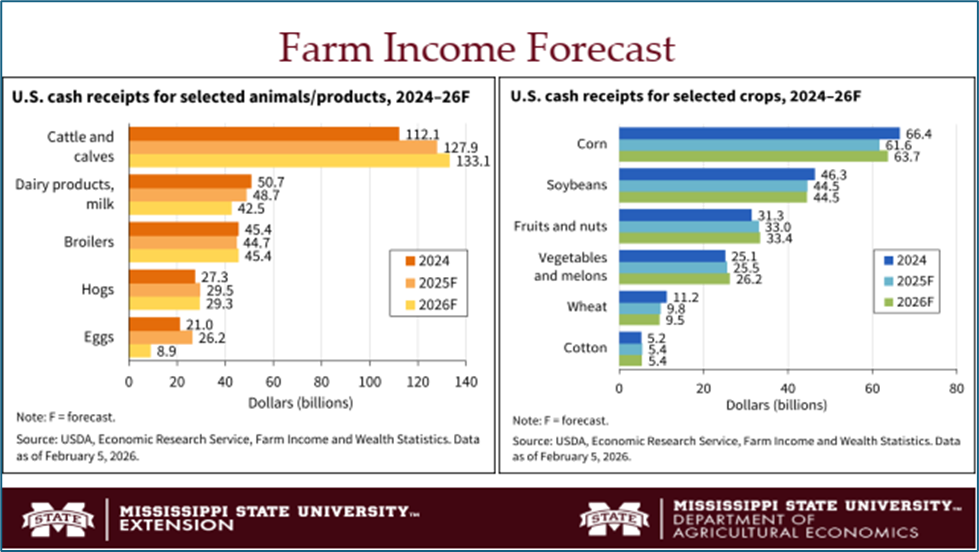
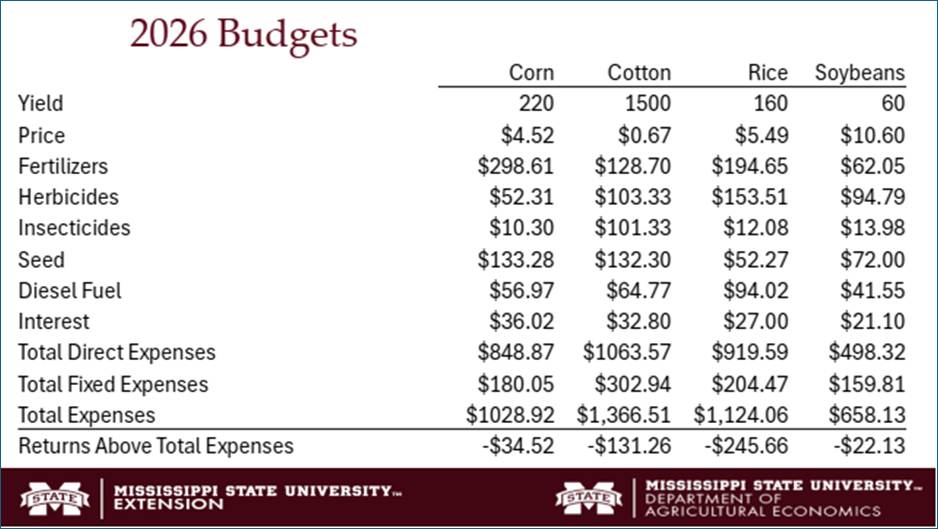
This pressure extends directly from the combination of lower commodity prices combined with consistently increasing costs of farm inputs eroding farm profitability as reflected in the pro forma below:
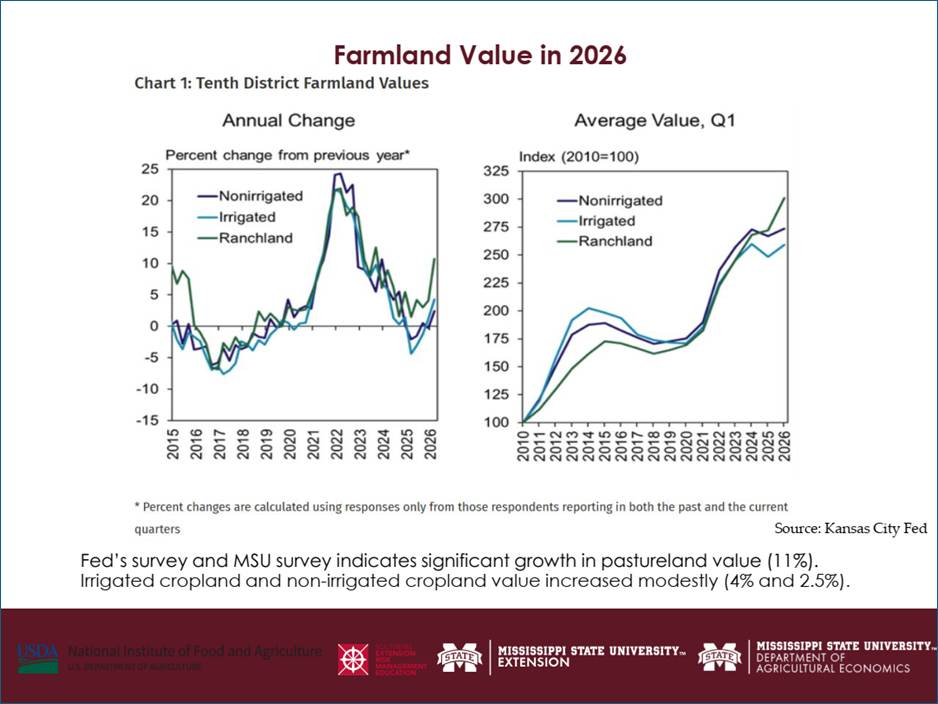
On the other hand, the farmland market data continues to tell its enduring story of resilience and stability, even when farm incomes are under pressure. Though cash rents for cropland have moderated slightly, farmland values in Mississippi have held up with projections of modest increases for 2026:
Many of these economic pressures on the farming economy are being driven by broader national and global economic and political forces outside of the agricultural sector’s control. These disruptive periods happen from time to time and are often short to intermediate term impacts from supply and demand imbalances for crop inputs and commodity prices. Despite these present challenges, the tenor of the group remained one of resilience, rather than resignation. A shared confidence permeated the room that, through disciplined operational execution, prudent financial management, and bushels of persistence and patience, these cyclical headwinds will once again be managed.
Promised Land: Shared Confidence in the Resiliency of American Agriculture
Promised Land shares that confidence in the enduring resiliency of American agriculture and in the people who operate within it. The Mid-South ASFMRA Starkville meeting offered a timely opportunity to underscore our belief that high-quality farmland, operated by capable tenants supported by patient, impact-oriented capital, can deliver on the promise of OZs —for investors and rural communities alike.
We presented our educational materials and investment approach for rural OZs to these professionals who see the market up close. Our presentation, “Opportunity Zone 2.0 Goes Rural,” outlined how the next chapter of the OZ program strengthens the toolkit for investing in rural America—through permanent OZ authorization, higher capital gain deferral basis step‑up for rural OZs (30% versus 10% for non-rural), lower substantial‑improvement thresholds for rural OZs (50% versus 100% for non-rural), and an expanded tax benefits for investments in production and processing assets under the One Big Beautiful Bill. For OZ investors, that means more ways to align impact capital with high‑quality farmland and essential agricultural infrastructure while capturing meaningful OZ tax benefits.
Confidence in American agriculture is grounded in the ag sector’s long‑term results rather than the economic machinations of any single crop year. The 2026 Mid‑South ASFMRA meeting underscored that, even in this more difficult part of the agricultural cycle, confidence in the resiliency of the American agricultural sector remains well placed. Promised Land is grateful to the Mid‑South ASFMRA Chapter for the opportunity to engage its membership, deepen their awareness of rural OZs, and reinforce Promised Land’s role in delivering purposeful results for rural American communities that have fallen behind economically from the rest of this great Nation.
The team at Promised Land wishes you all a safe celebration of America’s 250 years of Independence on the 4th of July.
Author: Mark Jablonski
Take It Easy released in 1972 was the debut single from their self-titled album, Eagles. This song is perhaps the most iconic tune about rural America among many. The song was written by Jackson Browne and Glenn Frey, inspired by the feelings of a road trip down Main Street America – Route 66. For far too long, rural America has been viewed through the reductive lens of flyover and drive through country. In this short piece, we’d like to introduce you to some of the street corners of rural Opportunity Zone investing.
A landmark August 2025 report from the McKinsey Institute for Economic Mobility challenges this “nothing to see here, move along narrative”, revealing an often stunningly diverse economic landscape that contributes $2.7 trillion to U.S. gross domestic product (GDP) (nearly 10%). The report, "Small towns, massive opportunity," identifies a critical need for targeted investment to unlock the potential of rural America’s 46 million residents.
The McKinsey Thesis: A Landscape of Distinct Archetypes
McKinsey’s data-driven analysis categorizes rural America into six distinct "archetypes," each with unique economic drivers and investment profiles. Three archetypes stand out as particularly ripe for growth:
- Agricultural Powerhouses: These communities drive the nation's food security, with agriculture accounting for 20% or more of their GDP. They boast the highest labor force participation rate among all archetypes at 59.8% and lead in overall resident well-being.
- Manufacturing Workshops: Accounting for 26% of the rural population, these are hubs where manufacturing represents 30% or more of GDP. These regions offer the strongest opportunities for upward economic mobility for middle-income residents.
- Resource-Rich Regions: These small, remote communities specialize in resource extraction (mining, oil, and gas), which accounts for over 25% of their GDP. While they face industrial shifts, they generate twice the GDP per capita of agricultural powerhouses.
Strategic Alignment: Promised Land and Rural OZ 2.0
The McKinsey thesis provides a clear roadmap for the next generation of place-based investing. The Promised Land Opportunity Zone (PLOZ) strategy aligns directly with the McKinsey strategic findings, leveraging the Opportunity Zone 2.0 (OZ 2.0) framework established under the One Big Beautiful Bill Act (OBBBA) in July, 2025.
Core Farmland Strategy
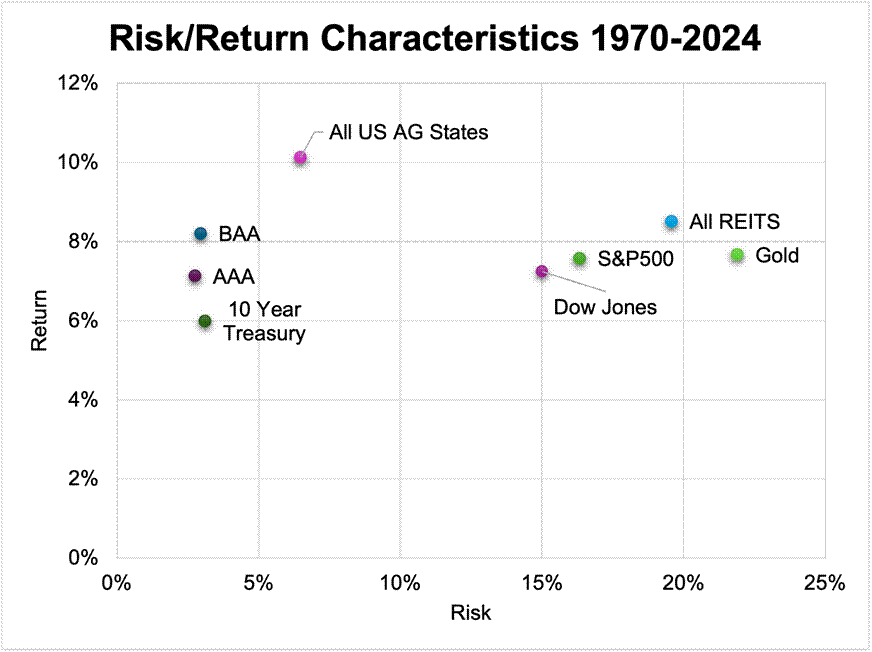
Promised Land’s foundation is built on investing in and improving high-quality US farmland located in OZs — the backbone of the "Agricultural Powerhouse" archetype. Farmland has historically provided superior risk-adjusted returns compared to traditional assets like the S&P 500 or Gold.
| Source: TIAA Center for Farmland Research |
Under OZ 2.0, the introduction of Qualified Rural Opportunity Funds (QROFs) significantly enhances the appeal of these investments:
- 30% Basis Step-Up: QROF investments receive a 30% basis increase after five years, compared to 10% for standard funds.
- Lower Improvement Threshold: The "substantial improvement" requirement for rural OZs is reduced from 100% to 50%, facilitating easier entry for projects like large-scale drainage tiling and grain storage.
Downstream: Qualified Production Activities
Beyond the soil, Promised Land sees considerable potential downstream of the farm in Qualified Production Properties (QPP). Under the OBBBA, QPP incentives can be applied to the "substantial transformation" of agricultural products. Examples include:
- Dairy Milking and Processing Parlors
- Grain Milling or Processing Plants
- Poultry Slaughter and Beef Packing Houses
An Opportunistic Frontier: Critical Minerals
Further afield of the agricultural sector, where we might apply a more opportunistic approach is the "Resource-Rich" real assets that are required to power modern economic activity, such as lithium, rare earth elements, and Dr. Copper. McKinsey identifies resource-rich regions as ideal for specialized mining growth, such as Missouri's tech hub for critical minerals processing, which is projected to create $34 billion in economic value.
By combining rural OZ tax benefits with a strategic focus on critical minerals—as explored in Servant Financial’s recent blog series—investors can target the "chokeholds" of the global supply chain, turning remote rural areas into potentially vital pillars of national security. Some of these resource rich rural OZs may have a common feature like Winslow, Arizona, a rail line and station.
Winslow Station is a historic railroad depot located at 303 East Second Street in Winslow, Arizona, serving as the primary Amtrak stop for the city and an integral part of the adjacent La Posada Hotel complex, which together form a key landmark along former U.S. Route 66. Winslow station serves as a flag stop on Amtrak's Southwest Chief route, operating daily between Chicago, Illinois, and Los Angeles, California, providing eastbound and westbound service to connect passengers across the Midwest, Southwest, and West Coast. Freight traffic over the years centered on lumber from northeastern Arizona forests, such as Ponderosa Pines, and livestock shipments, including cattle and sheep from Navajo County ranches.
The Winslow station's prominence in popular culture stems from the 1972 Eagles song "Take It Easy," which famously includes the lyrics "standin' on a corner in Winslow, Arizona." Although the song references a street corner rather than the station itself, it captures the many rural American towns’ quintessential rail, agricultural, manufacturing, and mineral resource heritage and that laid-back vibe and peace of mind often found on main street.
Resources:
Author: John Heneghan
The American Heartland is standing at the threshold of a historic rural investment boom. With the passage of the One Big Beautiful Bill Act (OBBBA), Opportunity Zone 2.0 is no longer just a concept—it is a high, precision GPS-guided, 48-row planter behind a 500-horsepower tractor sowing seeds for the next great rural American renaissance. At Promised Land, we aren't just sitting idly by waiting for the OZ map to change; we are preparing for more favorable weather and an expected optimal investment climate ahead for rural OZs. We are aligning investor capital with the abundant, fertile growing regions across the country to ensure that American farming communities remain a vibrant backbone of our national economy.
Opportunity Zone 2.0 is in the early stages of its program rollout and Promised Land OZ is well-positioned to lead the educational and community engagement aspects. As we mentioned in our blog post, OZ 2.0 Takes Aim at Rural America, the Opportunity Zone Program was extended under the OBBBA on July 4th, 2025. The program extension establishes a permanent framework for opportunity zone investment with special incentives for investments in rural opportunity zones. While standard, non-rural Opportunity Zones offer a 10% step-up after a mandatory 5-year capital gain deferral period, the OBBBA has been designed to supercharge rural OZ investment. By offering a 30% step-up in basis, the federal government isn't just inviting investment—it’s issuing a mandate for revitalization of the American Heartland.
States and Federal Government Timeline
As the State Governors and the U.S. Treasury begin working through the OZ tract designation and certification process for Opportunity Zone 2.0, Promised Land is preparing to seed the next generation of rural growth by efficiently deploying investor capital at the program’s kickoff on January 1, 2027. Promised Land has a consistent track record of effectively deploying capital in farmland located in rural OZ communities. As the next generation of designations approaches, we are taking a proactive approach to ensure we are ready to move quickly to invest in farmland located in existing OZ 1.0 tracts and the OZ 2.0 cohort once these new tracts are finalized. Both OZ 1.0 and OZ 2.0 designated tracts qualifying as “rural” will be eligible for the 30% step up benefit.
From the timeline outlined below, state governors are quickly approaching their 90-day window to submit tracts for OZ 2.0 designation. Promised Land has been working to be an integral partner to this process in several states. Our fund manager, John Heneghan, accepted a seat on the Illinois Department of Commerce and Economic Opportunity (DCEO)’s Opportunity Zone 2.0 Ad Hoc Advisory Board. This actively positions Promised Land to continue its legacy as the leading rural development partner for Opportunity Zones located in American Farming Communities.
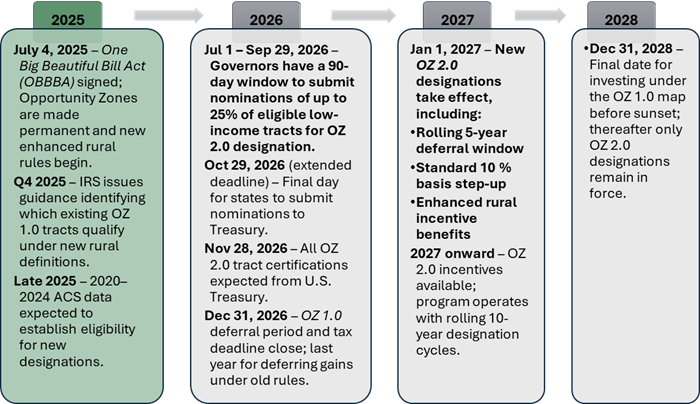
Activating the Pipeline for Rapid Deployment in 2027
In advance of the U.S. Treasury’s expected certification of new Opportunity Zone tracts, Promised Land is focused on expanding our sourcing network and deal pipeline to facilitate the rapid deployment of investor capital in 2027.
This includes engaging with potential partners, operating tenants, and prospective Fund III investors, while continuing to educate the broader investment community about the role Opportunity Zones can play in supporting agricultural land stewardship and rural economic development.
In January 2026, the Promised Land team presented during a breakout session at the Land Investment Expo in Des Moines, where we shared insights on Opportunity Zone 2.0 and its enhanced benefits for rural communities. In addition, John Heneghan attended the Novogradac Opportunity Zones Summit in December, delivering a similar presentation tailored to an investor-focused audience and highlighting how capital can be deployed effectively in rural Opportunity Zones.
Promised Land is also exploring other avenues to connect with our rural partners, such as attending the annual meeting of the Mid-South Chapter of American Society of Farm Managers and Rural Appraisers, and potentially sponsoring the 2027 FARMCON Conference hosted by Kevin Van Trump. Promised Land hopes to deepen its engagement with farmers who may have capital gains to reinvest, demonstrating how Opportunity Zone investing could provide a strategic way to put those gains to work.
At the same time, Promised Land is expanding its network of landowners, operators, and capital partners across agricultural regions. Through these relationships, the firm is identifying and pre-qualifying farmland assets that may fall within anticipated Opportunity Zone 2.0 boundaries. Our property pre-qualification strategy is discussed below. Preliminary diligence, property screening, and market analysis are being conducted to build a pipeline of potential acquisitions ahead of the designation deadline.
Post–November 28, 2026: Promised Land Deployment and Acquisition
Following the certification of updated Opportunity Zone designations by the U.S. Treasury, Promised Land will move to finalize property selections located within qualifying OZ 1.0 and 2.0 tracts.
With its acquisition pipeline flowing, the firm will advance full underwriting, finalize due diligence, negotiate, and execute purchase agreements on the most attractive farmland investments. The goal is to close on the highest priority farms in early 2027, positioning investors to benefit from OZ 2.0 program’s enhanced rural incentives, including the rolling deferral structure, 30% step up, and lower improvement requirements (50% versus 100%) for rural OZs.
Through this phased approach, Promised Land aims to remain at the forefront of rural Opportunity Zone investment, deploying patient capital into American farming communities while advancing long-term land stewardship practices and agricultural productivity.
Promised Land’s Pre-Qualification Strategy
To move at the speed of the market, we’ve standardized our vetting process to achieve two critical goals: education and execution. First, prequalification guidance will help educate the broader agricultural and investment community about the applicability of Opportunity Zones to farmland. Second, this guidance provides our partners with a practical framework for evaluating farmland properties and their suitability for OZ improvement requirements before presenting them to the Promised Land team.
The checklist allows partners to evaluate properties as they come to market and organize key information before submitting opportunities for underwriting review and valuation.
We’ve distilled years of institutional expertise into a streamlined 15-minute diagnostic. This isn't just a form; it’s the quickest path for our partners to move a 'potential lead' to 'actionable asset' before the ink on the Treasury's new maps even has a chance to dry. The checklist includes sections covering a property overview, Opportunity Zone qualification, potential development opportunities, a snapshot of the surrounding local economy, physical and soil characteristics of the cropland, and the qualifications and track record of existing tenant operator. Our hope is that this process empowers our partners to efficiently evaluate potential opportunities and forward the most promising properties to the Promised Land team.
The Property Overview section captures the basic information about the asset, including its location, asking price, acreage, and primary crops grown. We also ask partners to indicate whether they have an existing relationship with the property, whether through local familiarity, prior operating experience, or current management responsibilities.
The next section evaluates whether the property’s location qualifies under either Opportunity Zone 1.0 or Opportunity Zone 2.0. The existing Opportunity Zone 1.0 designations have been in place for several years, while the updated 2.0 designations are currently in development and expected to be released later this year. Fortunately, organizations such as Economic Innovation Group and Novogradac have developed tools that help determine whether a tract is likely to qualify under the updated Opportunity Zone 2.0 eligibility guidelines.
The central objective of the Opportunity Zone program is to drive private investment into lower income communities and census tracts that are starved for economic development. For farmland assets to align with both the program’s goals and Promised Land’s investment philosophy, properties must present a clear value-add improvement opportunity. Examples may include installing drainage tile, expanding or adding new grain storage capacity, adding irrigation systems, or making other capital improvements that increase the land’s productivity capacity and long-term value. Our partners, who often have deep local knowledge, are frequently better positioned to evaluate many of these development opportunities. Additional sections of the form ask partners to document a farm’s existing improvements and soil characteristics to help establish the property’s baseline condition for valuation purposes and determining whether further investment may be warranted and economically beneficial to farmer tenants.
Another important component of the evaluation process is the local economic environment of the property. Farmland located near key delivery points, such as export facilities, processing plants, or major crop offtake centers, often benefit from stronger long-term demand and logistical advantages. Our partners assess each property’s proximity to these critical infrastructure assets, along with general observations about the local agricultural economy, depth of potential tenant base, and competitive dynamics within the market.
The Path Forward
The Promised Land team is currently sharing this pre-qualification framework with its partnership network while educating the broader economic development community about the role Opportunity Zones can play in farmland investment. By combining a disciplined screening process with strong on-the-ground partnerships in these communities, Promised Land is building a scalable process aligned with the economic development goals of the Opportunity Zone program and the long-term benefits of committed stewardship of productive agricultural land.
Just as a 500-horsepower tractor prepares the field for a bountiful harvest, Promised Land is laying the groundwork for a new era of rural prosperity. As OZ 2.0 takes root, we remain committed to our mission: channeling patient, purposeful capital into the heart of rural America. Together with our partners, we are cultivating a legacy of responsible stewardship and robust economic growth that will sustain the American Heartland for generations.
Article By: Ailie Elmore
The 19th annual Land Investment Expo took place January 12–13 in Des Moines, Iowa, hosted by Peoples Company. The Promised Land team had the pleasure of both attending and presenting during one of the breakout sessions. The two-day event featured a Farmland Master Class on January 12, followed by dynamic presentations on January 13 from world-class economists, investors, farmers, agribusiness professionals, and other subject matter experts. Attendees represented a diverse range of backgrounds, including wealth managers, investment advisors, production agriculture professionals (farmers, ranchers, and vintners), land management and acquisition specialists, and educators. Sessions challenged listeners while offering a wide breadth of content, ranging from land values and returns to tariff disputes and sustainable farming practices.
Geopolitical strategy expert Peter Zeihan kicked off the conference with his presentation, “And Here We Are… At the End of the World.” Despite the ominous title, his commentary was not entirely negative, and his humor brought levity that even the most serious attendees could appreciate. A frequent Land Expo speaker, Zeihan is particularly adept at connecting global demographic trends and geopolitical events to their implications for the U.S. agricultural economy.
Much of his presentation focused on global population dynamics, including birth rates and aging trends, and how these factors influence economic growth, technological advancement, and infrastructure. China was a major point of emphasis, as the country faces a significant demographic challenge. Its one-child policy, in effect from 1979 to 2016, was implemented to curb what the government viewed as unsustainable population growth. However, the policy also led to unintended consequences, including a rapidly aging population and a severe gender imbalance, as cultural preferences for male children resulted in the widespread underreporting or abandonment of female births. Today, China faces a shrinking workforce and a surplus of working-age men with limited prospects for marriage and family formation. According to Zeihan, these demographic shifts pose serious challenges for China’s labor supply and threaten its long-term position as a global economic powerhouse.
Zeihan then turned his attention to the United States, discussing both demographic trends and the current political landscape. He noted that a wave of executive orders issued by President Trump reflects, in part, Congress’s ongoing difficulty in reaching decisions. Zeihan argued that globalization was always destined to fracture and that Trump merely accelerated this process. He also touched on the USDA’s challenges in implementing effective policy amid organizational strain and staffing shortages following recent federal employment cuts. These remarks served as a fitting introduction to the next speaker, USDA Deputy Secretary Stephen Vaden.
Vaden took the stage and responded directly to several of Zeihan’s comments regarding USDA inefficiency. He emphasized that the USDA is actively working to reduce its physical footprint while strengthening its capacity as an institution critical to farm economics. Vaden highlighted the agency’s ability to cut approximately $1 billion from its $203 billion budget by closing underutilized and vacant USDA buildings on the National Mall and across the country.
He also discussed plans to shift USDA operations away from Washington, D.C., and closer to its primary stakeholders, farmers. The USDA already maintains a significant presence in Kansas City, where the Economic Research Service is headquartered, making it a likely hub for expanded operations.
Vaden further referenced upcoming ad hoc support payments totaling $12 billion, expected to be distributed in February, to help farmers navigate a low commodity price environment driven by tariffs and strong crop yields and production. While the U.S. and China have reached an interim agreement and China has resumed purchasing soybeans at agreed-upon levels, uncertainty remains regarding the durability of current trade arrangements. In addition, there is ongoing discussion in Congress about potential supplemental legislation to provide additional assistance to farmers if market conditions remain weak. However, until such legislation is passed and funded, it remains unclear whether the USDA will be able to continue providing ad hoc support at similar levels in the future.
Following the morning keynote, the first round of breakout sessions began. Promised Land presented “Opportunity Zone 2.0 Goes Rural,” which explored updates to the Opportunity Zone Program included in the “One Big Beautiful Bill.” Led by John Heneghan and Mark Jablonski, the session highlighted the overall success of the initial Opportunity Zone program and outlined key program changes, with particular emphasis on new incentives designed to promote greater investment in rural Opportunity Zones and Qualified Production Properties (QPP). The presentation is available here.
The lunch keynote session featured a mix of award presentations, a discussion on family office involvement in agriculture, and a dose of what was affectionately described as “lunatic farming.” Peoples Company awarded its Farmer of the Year honor to Kevin Babb of Champaign County, Illinois, recognizing his lifelong achievements in agriculture.
Eric O’Keefe, master of ceremonies and editor of The Land Report, unveiled the Winter 2025 issue, which highlighted Stan Kroenke’s acquisition of nearly one million acres. The 937,000-acre purchase in New Mexico represents the largest single land acquisition in the United States in more than a decade and propelled the Los Angeles Rams owner to the top spot among U.S. landowners.
Following the unveiling, Joel Salatin took the stage and energized the room with his self-described “lunatic farming” philosophy. The prolific author and co-owner of his family farm described himself as a “Christian libertarian environmentalist capitalist lunatic farmer.” His operation provides meat and forestry products to more than 5,000 families, 10 restaurants, and five retail outlets. Salatin is also widely known for mentoring young people and advocating for local, regenerative food and farming systems.
Ron Diamond followed with a highly anticipated session titled “What Is a Family Office and Why Does It Matter?” Diamond, Founder and Chairman of Diamond Wealth, leads a syndicate of more than 100 family offices ranging in size from $250 million to $30 billion. He discussed how high-net-worth individuals are increasingly allocating capital to alternative assets, including farmland, and explored the evolving role of family offices in today’s investment landscape.
Diamond highlighted the massive generational wealth transfer underway, noting that approximately $124 trillion is expected to move from baby boomers to the next generation. As family offices grow in scale and sophistication, they are beginning to compete with, and in some cases encroach upon, traditional private equity. Unlike private equity firms, family offices typically operate with longer investment horizons, a tax-aware approach, and a patient-capital mindset with closely aligned interests.
He emphasized farmland’s ability to support long-term, multigenerational wealth objectives, aligning naturally with the perspective of family offices. Beyond financial returns, Diamond noted a growing desire among family offices to be part of America’s agricultural legacy, viewing farmland not only as a durable asset class, but also as a means of preserving land, supporting food production, and remaining connected to the country’s agricultural heritage. He concluded by posing a central question: “How do the rich people find the smart people, and how do the smart people find the rich people?”
The afternoon breakout sessions covered a wide range of topics, including timberland investment opportunities, farmland market overviews, water management strategies, succession planning, agricultural economics updates, and tax-deferred land strategies. The Promised Land team valued the opportunity to network with other professionals and explore potential collaborations during these sessions.
The afternoon keynote featured Ed Yardeni, President of Yardeni Research, Inc., who shared his outlook on the economy. He characterized the current decade as one of continued economic expansion, describing the U.S. as already six years into what he calls the “Roaring 2020s.” Looking ahead, Yardeni expressed confidence that growth will persist through the remainder of the decade and stated that he does not anticipate a recession in the near term.
Yardeni also addressed the intersection of politics and markets, cautioning investors against allowing political views to interfere with sound investment decisions. He emphasized that opportunities exist regardless of which party occupies the White House, noting that market downturns often present buying opportunities rather than reasons to retreat.
Geopolitical expert Marko Papic closed the expo with a forward-looking presentation titled “The End of U.S. Exceptionalism.” Papic suggested that 2026 will be shaped less by headline geopolitical events and more by economic policy decisions aimed at extending the current cycle. He highlighted the growing role of household wealth, particularly home equity, in sustaining economic momentum.
Papic also noted increasing investor interest in tangible, real assets such as land and minerals, suggesting that this shift should support long-term values. He expressed confidence in the stability of land and real estate markets over the coming decade, stating that he does not anticipate a meaningful change in their trajectory. Papic concluded by suggesting that land values may ultimately rival traditional stores of value, including gold, as investors continue to seek durable, inflation-resistant assets.
The Land Investment Expo 2026 reinforced the increasingly central role that land, agriculture, and real assets play in a rapidly evolving economic and geopolitical landscape. From global demographic shifts and domestic policy challenges to generational wealth transfer and long-term investment strategies, the conference underscored the importance of taking a broad, forward-looking view of agriculture and land ownership. Speakers consistently emphasized resilience, whether through farmland’s durability as an asset class, regenerative farming practices, or patient, values-driven investment, and highlighted the need for adaptability in an era of uncertainty.
For the Promised Land team, the expo offered valuable insights, meaningful dialogue, and opportunities to connect with like-minded professionals committed to the future of American agriculture. As investors, operators, and policymakers navigate the remainder of the decade, Land Investment Expo 2026 reemphasized farmland as a cornerstone of economic stability but also a lasting link to America’s agricultural heritage and long-term prosperity.
Author: Ailie Elmore
Introduction
Since its inception, the Opportunity Zone (OZ) program has mobilized nearly $100 billion in private capital, establishing itself as one of the most significant place-based economic development initiatives in the history of the United States. However, data from the Economic Innovation Group and the Joint Committee on Taxation indicates that the initial iteration of the program, OZ 1.0, saw investment flow disproportionately toward urban centers. While the program was successful in many regards, only an estimated 10% of total OZ capital reached rural low-income communities despite an estimated 40% of eligible tracts being considered rural in nature.
With the enactment of the One Big Beautiful Bill Act (OBBBA) on July 4, 2025, the landscape has shifted significantly. This legislation not only codified the Opportunity Zone program as a permanent economic tool but also introduced specific, powerful incentives designed to correct the previous urban-rural capital imbalance. By creating a distinct category and related incentives for rural OZ investment—the Qualified Rural Opportunity Fund (QROF)—policymakers have effectively widened the path for capital to flow into America’s agricultural heartland. For tax practitioners and investors, understanding the mechanics of these new rural-specific incentives is essential for planning future capital deployment.
A Permanent Framework for Investment
The most fundamental change introduced by the new legislation is permanency. The original program was a temporary incentive scheduled to sunset, but the OBBBA has transitioned the OZ regime into a permanent fixture of the tax code.
Under this new "OZ 2.0" framework, the investment period officially begins on January 1, 2027. This reboot comes with a new map; governors in all 50 states must submit new census tract nominations by July 2026. While the general structure of deferring capital gains remains, the legislation introduces a bifurcation in benefits that heavily favors rural investment.
The Qualified Rural Opportunity Fund (QROF)
To access the enhanced rural benefits, investors must utilize a Qualified Rural Opportunity Fund (QROF). The legislation defines a QROF as a fund that invests at least 90% of its assets into designated "rural OZs." This distinction is critical. A standard Qualified Opportunity Fund (QOF) continues to offer attractive tax efficiency, but a QROF unlocks two specific "super-incentives" designed to effect change in rural economies: a significantly higher step-up in basis and a lower substantial improvement threshold.
Rural America’s Fundamental Case: Food, Fuel, and Fiber
While tax incentives provide the catalyst for capital movement, the underlying investment thesis for rural Opportunity Zones rests on its production of essential resources. Rural economies are generally anchored around the production of the necessities of life: food, fuel, and fiber. Because demand for these commodities is constant, the asset classes associated with their production—specifically cropland, pastureland, and agricultural facilities—have historically demonstrated unique economic resilience.
Data courtesy of the TIAA Center for Farmland Research at the University of Illinois covering the period from 1970 to 2024 highlights this attractive risk-reward profile. During this timeframe, farmland delivered equity-like returns of approximately 10% (outperforming the S&P 500 of approximately 8%) yet maintained a lower risk profile than the S&P 500 that was more comparable to bonds, with volatility near 7%. The underlying historical performance data suggests that rural assets can function as an inflation hedge similar to gold, but with the distinct advantage of generating annual operating income—effectively acting as a store of value with a "coupon."
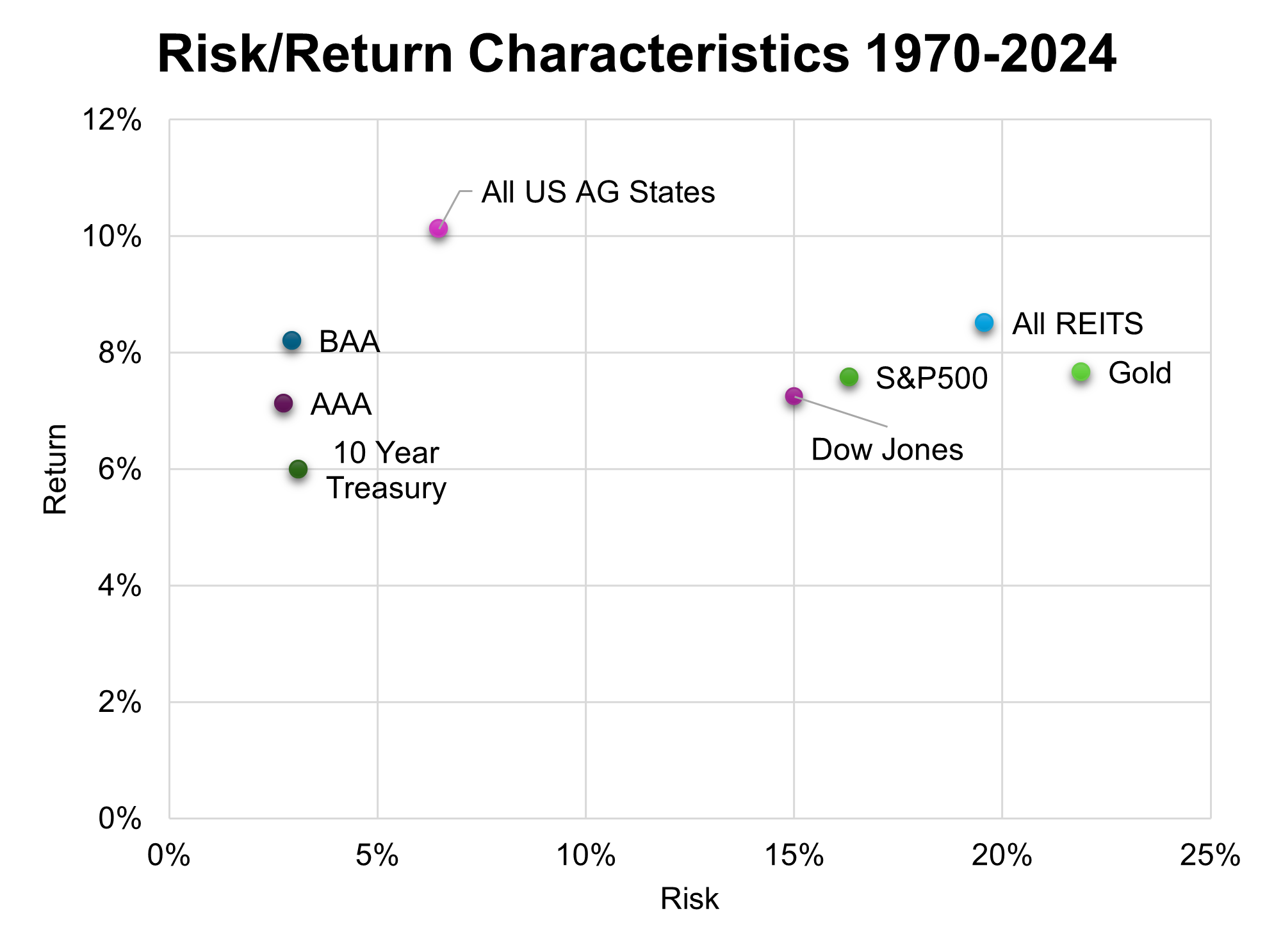
[This Risk/Return Graphic is based on data from the TIAA Center for Farmland Research (1970–2024), farmland occupies a unique investment quadrant: offering equity-like returns (~10%) with the low volatility profile of fixed income (~7%).]
This stability is particularly relevant to the Opportunity Zone structure, which mandates a long-term hold. Historical performance indicates that farmland values appreciate at a spread of roughly 2% over inflation. Furthermore, the historical data shows that investors who held farmland for the 10-year period required by OZ rules would have remained in positive territory, even if they had purchased at market peaks preceding major economic downturns like the 1980s farm crisis. By coupling these fundamental attributes with the new OZ 2.0 incentives, the rural sector presents a compelling case for risk-aware, long-term capital.
Supercharged Incentive #1: The 30% Step-Up
The first, and perhaps most attractive, incentive for investors is the enhanced step-up in basis. Under the standard OZ 2.0 rules, an investor who holds their interest in a QOF for five years receives a 10% step-up in basis on the deferred taxes. This is a valuable benefit, effectively reducing the tax liability on the original capital gain by 10%.
However, the OBBBA provisions state that for investments made through a QROF, that benefit triples. Investors who hold their QROF investment for five years receive a 30% step-up in basis. This dramatic increase significantly alters the return profile for rural investments, offering a "buffer" that can make rural development deals competitive with potentially higher-yielding urban real estate development projects. This 30% step-up acts as a powerful
magnet for patient capital, rewarding investors for allocating capital to rural areas that have historically struggled to attract institutional capital.
Supercharged Incentive #2: The 50% Improvement Threshold
The second hurdle in the original OZ program was the "substantial improvement" requirement. To qualify for tax benefits, an investor purchasing an existing asset generally had to double its basis—investing $1 for every $1 of the asset’s value (excluding land) within a 30-month window. In rural settings, where asset values can be idiosyncratic and construction logistics more challenging, this 100% improvement threshold often proved challenging.
The new legislation directly addresses this potential impediment. For QROFs, the substantial improvement requirement is reduced to 50% of the property's acquisition basis (excluding land).
This lower threshold is a game-changer for agricultural operations, making a wider range of infrastructure upgrades economically viable. For example, a farming operation might not need to double the value of its existing improvements to increase the farm’s productivity. Under the new rules, a moderate investment in modernization of production facilities and farm equipment, such as grain bin storage, drainage and irrigation, now qualifies.
Practical Application: What Qualifies?
The OBBBA may also open the path for higher return seeking OZ investors to venture into downstream agricultural infrastructure. In addition to reauthorizing bonus depreciation on equipment with useful lives of 20 years or less, the OBBBA established similar accelerated depreciation on Qualified Production Property or QPP. Newly constructed facilities eligible for treatment as QPP would typically have IRS useful lives of 39 years, but if they meet the definition of QPP these assets can be fully depreciated in the year placed in service. QPP must be used for manufacturing, production, or refining activities. Eligible “production” activities under the OBBBA have been specifically limited to agricultural and chemical production. The legislation is also specific about what constitutes a qualified activity, focusing on the "substantial transformation" of personal property.
Practical examples of downstream agriculture infrastructure investments that could be feasible under the QROF structure include:
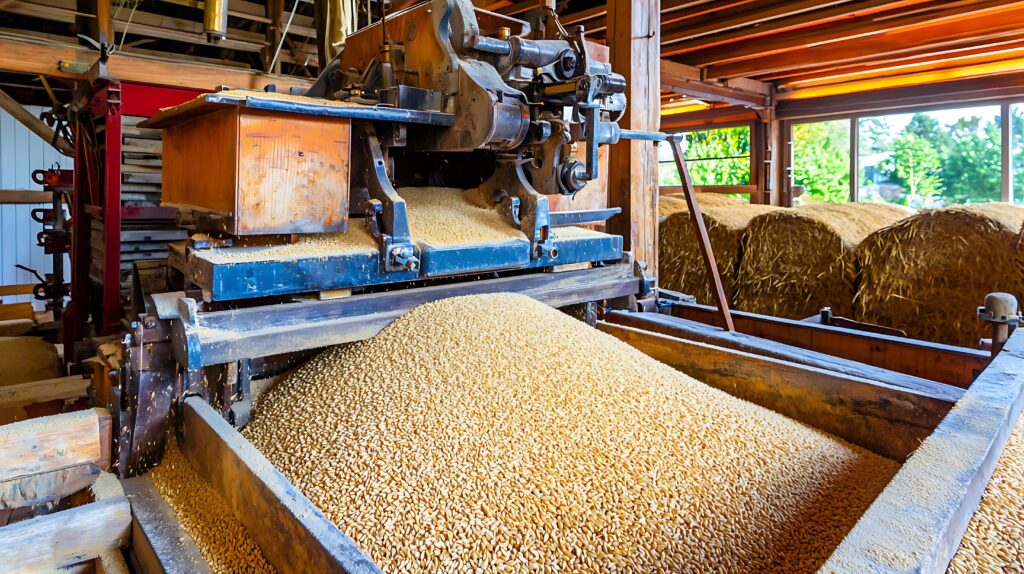
- Grain Milling: Facilities that process raw grain into feed or food products.
- Livestock Operations: Dairy milking parlors, poultry processing plants, and hog confinement facilities.
- Specialized Processing: Facilities for wool shearing, egg production, or aquaculture.
QPP within a QROF would offer a highly attractive investment for OZ investors while simultaneously modernizing the American heartland’s aging agricultural infrastructure.
Conclusion
The transition to Opportunity Zone 2.0 marks an important shift from a broad-brush approach to a more targeted economic strategy. By offering a 30% basis step-up and lowering the improvement barrier to 50%, the OBBBA acknowledges the unique economic realities of rural America. These incentives are likely to affect a meaningful movement of capital gains from traditional urban real estate into America’s breadbasket, offering investors tax efficiency while providing rural communities the opportunity to modernize agricultural infrastructure for the production of the necessities of modern life.
Article By: John Heneghan
The time has once again come for farmers across the United States to harvest their crops and bring another growing season to a close. If you’ve traveled through the I-States (Indiana, Illinois, or Iowa) recently, you’ve likely seen combines rolling steadily across fields, reaping what has been sown. Harvest time is both exhausting and deeply rewarding, a season that stirs memories of past years while sowing hope for what lies ahead.

Still, 2025 has not been an easy year for U.S. agriculture. Tariff tensions have weighed heavily on commodity markets, pushing prices below breakeven levels amidst uncertainty about end market demand and where this year’s grain will ultimately go. As of late October, December corn futures sit around $4.29 per bushel, and November soybeans near $10.64. According to the University of Illinois Farmdoc team, break-even prices for high-productivity farmland are closer to $4.63 for corn and $10.87 for soybeans, meaning most producers are operating in the red. Some farmers sold a portion of their crop when prices peaked in the spring, before tariff headlines hit in April, but most farmers have held back, hoping for a rally that has yet to materialize.
A recent Farm Journal survey of more than 1,100 corn producers signals that 2025 yields will likely fall short of 2024’s record output. The national average is expected to be near 178.5 bushels per acre, down slightly from last year’s 179.3. The steepest declines are showing up in the key I-states, with Illinois down about 7%, Indiana off 4.6%, and Iowa down 3.2%. In contrast, northern states like Minnesota and South Dakota are expected to post modest gains of roughly 3–4%. Disease pressure, late-season dry spells, and localized stress have been key challenges. As of mid-October, roughly 43% of the corn crop had been harvested, and 79% of soybeans were in the bin, helped along by favorable in field drying weather. Storage capacity, however, is becoming a pinch point in parts of the Northern Plains, where over half of South Dakota farmers reported insufficient space for this year’s crop. Even a modest national yield dip in the heart of the Corn Belt could have an outsized influence on overall production and pricing dynamics heading into the 2026 crop year.
Economically, many producers are feeling the squeeze. Farm economists warn that the current downturn is serious, but not quite a replay of the 1980s farm crisis. Nearly 70% of economists see parallels to that difficult decade, but they also note that today’s farmers benefit from stronger USDA safety nets, crop insurance programs, and credit frameworks. The headwinds are clear: soft global demand, high input costs, and continued consolidation across the ag sector. Livestock markets have remained relatively stable, but crop producers are bearing the brunt of compressed farming margins. Economists describe the situation as a “slow grind” rather than a collapse. The situation is painful for the ag sector, but with resiliency has been built into the sector over many trials. Recovery of farming margins will likely come slowly and unevenly.
Amid these challenges, the USDA’s announcement to release over $3 billion in farm aid offers some much-needed relief to stressed farmers. The funds, drawn from the Commodity Credit Corporation, had been frozen during the recent government shutdown. The government shutdown has also delayed USDA loan processing and farm-service payments at a critical time in the harvest cycle. This new round of support aims to help producers navigate low commodity prices, high input costs, and lingering trade disruptions. Still, questions remain about eligibility, timing, and whether more aid, potentially totaling $10 billion or more, may follow.
In short, the 2025 harvest tells a familiar story in American agriculture: resilience under pressure. Yields may be a touch lighter, the margins tighter, and the markets uncertain, but the hard work of the harvest continues. As combines finish their passes and grain bins fill, farmers across the country are once again doing what they’ve always done best, getting the crop in, steadying their balance sheets, and preparing to start all over again next spring.

The month of August often signals a season of transition and excitement—back-to-school mania, the kickoff of college football, and the return of the ever-popular pumpkin spice latte at Starbucks. In agriculture, however, August also marks the release of one of the most anticipated publications of the year: the USDA Land Values Summary.
The USDA Land Values Summary is an annual report from the National Agricultural Statistics Service (NASS) that provides average values of U.S. farmland (farm real estate, cropland, and pastureland) and the average cash rental rates for cropland and pasture. It’s important because farmland is the foundation of U.S. agriculture, and its value is a key indicator of the health of the farm economy. Rising or falling land values affect:
- Farmers and landowners – influencing borrowing power, equity, and farm profitability.
- Investors and lenders – serving as a measure of asset strength and collateral value.
- Policy and research – guiding decisions on agricultural programs, conservation, and rural development.
In short, the summary provides a national “benchmark” for assessing farmland affordability, producer balance sheets, and broader rural economic conditions. Data are collected directly from producers through nationwide surveys, with results broken down by region and state. The report first presents farm real estate values (all agricultural land and buildings), and then provides more granular analysis by cropland and pasture categories.
For Promised Land’s purposes, our focus remains on cropland values, which most directly align with our investment strategy.
Current Trends in Cropland Values
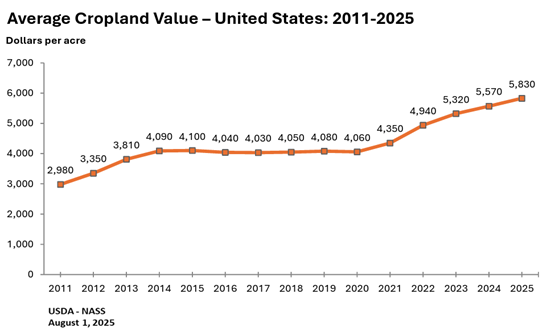
Cropland values continue to trend upward across the United States, even as commodity prices have weakened throughout much of 2024 and 2025. Historically, land values have been closely correlated with commodity prices. Many agricultural stakeholders expected land values to decline this year in response to lower commodity prices, tariff concerns, and generally declining farm income. While lower-quality land has begun to see a leveling off in values, higher-quality land and land with development potential have continued to appreciate. Note that USDA uses Average Total Cropland meaning it includes both lower quality and higher qualities farmland in the calculation. Promised Land's focus is to invest in high quality, very productive farmland meaning these averages are not reflective of the quality of Promised Land's portfolio.
At the state level, we see the familiar pattern of strong average land values in the Corn Belt, California, and Florida—some of the most agriculturally productive regions in the country. Although these states are no longer experiencing the near double-digit growth that followed the COVID-19 pandemic, they remain resilient and continue to demonstrate strength in a challenging agricultural environment
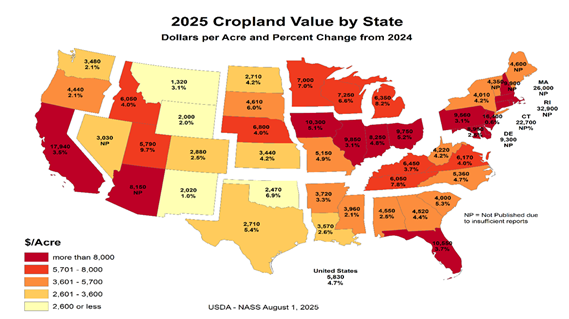
Concerns remain, however, that these trends may not be sustainable. Tariffs continue to take effect, demand for solar and wind projects is slowing, and commodity prices lack momentum. The USDA has already revised its harvest yield expectations upward by 7.8 bushels in the August 2025 Crop Production Report compared to July’s report. Ideal growing conditions in Iowa, Nebraska, and parts of Illinois and Indiana are contributing to expectations of a large harvest, which could further depress commodity prices. As farmers move into harvest season, the global agricultural community will be monitoring these reports closely.
As Promised Land continues to develop plans for OZ 2.0, our efforts will remain concentrated in areas of the country that have demonstrated strong growth in land values and continue to show promise for future expansion.